

Stress Echo: A valuable tool in the hands of cardiologists to combat heart disease
1. In recent years, we have observed an increase in heart disease. What is the first test that someone should undergo?
In addition to the clinical examination by a cardiologist and the electrocardiogram, the echocardiogram (Triplex of the heart) is the first test before further testing. The echocardiogram is a painless, non-invasive test that does not emit radiation.
It offers important information about how the heart works, as well as being a useful tool for the diagnosis and appropriate treatment of various cardiovascular diseases. In addition to general heart function, it offers information about the function of the valves, the dimensions of the heart, the thickness of its walls, and any structural heart disease in general. However, it does not give us information about the condition of the heart arteries.
2. How is such a test performed?
Stress Echo or Dynamic Echocardiography, as a functional diagnostic test, is now a first-choice test (class I) for the diagnosis of coronary artery disease, in contrast to the simple stress test (class IIb). Furthermore, if the findings of the coronary angiography (class I) show stenosis <90% (non-diagnostic), then the next test is again Stress Echo. The above are very recent guidelines, issued last September (2019), by the European Society of Cardiology for the investigation of Coronary Artery Disease.
3. So, in practice, what information do we get from this test?
It is a fast and effective test that uses ultrasound to monitor cardiac function under stress-fatigue conditions. It provides us with important information about both the overall and segmental function of the myocardium, checking both its movement and thickening.
4. Stress echo with dobutamine (Dynamic Echocardiographic Study):
The test is performed with a specific protocol of loading with dobutamine, administering an echo contrast agent (a special contrast agent) and finally administering a beta-blocker intravenously. In some cases, atropine is also administered intravenously.
It is a test of choice for women and men which offers:
- Early and Valid diagnosis of coronary artery disease in one or more vessels, in patients with suspected or known coronary artery disease.
- Complete viability test or monitoring of the myocardium in patients with known coronary artery disease and previous infarction.
- Detailed prognosis of patients with known or unknown coronary artery disease, such as patients with diabetes mellitus, renal dysfunction, hypertension and elevated cholesterol.
- Complete preoperative screening of patients who are about to undergo cardiac or non-cardiac surgery.
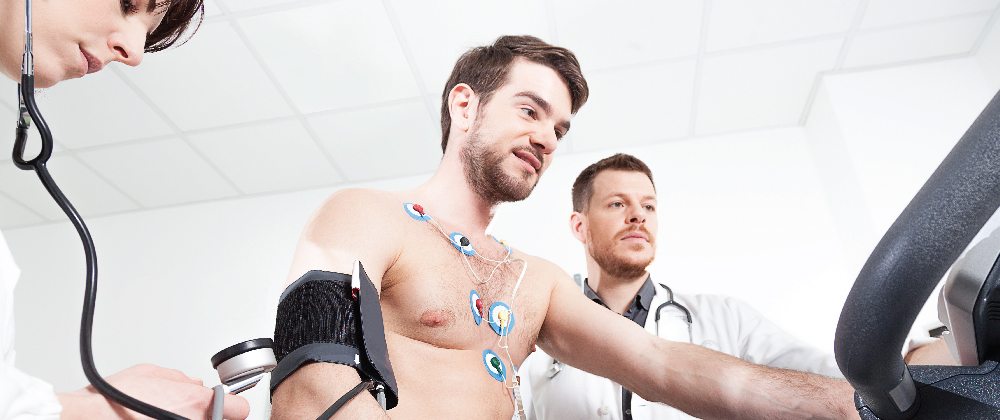
5. Stress echo with ergometric bicycle:
It is performed for diagnostic purposes to investigate Valvular heart disease and hypertrophic cardiomyopathy, to check myocardial viability, but also for the prognosis of patients. In addition, it is increasingly used to investigate unexplained dyspnea (shortness of breath) with easy fatigue or at rest.
6. Is it a safe test?
With this test, the patient does not receive a radioactive drug, as with scintigraphy, making it completely safe in terms of the emission of radioactive material.
At the same time, we should note that the contrast agent that we may use is not metabolized in the kidneys, therefore, the patient does not need to prepare by taking fluids before or after the test, making it the test of choice even in patients with mild or more severe renal failure.
As a stress test, it carries the same risks as a simple stress test. This means that it should be performed by a qualified cardiologist with certification in this particular test and of course with the assistance of an experienced nurse during the test. In addition, the latest generation ultrasound machines should be used, and the laboratory where it is performed should be properly certified.



