

Innovative mitral valve repair method at the Interbalkan Medical Center
A percutaneous mitral valve repair was successfully performed at the Interbalkan Medical Center of Thessaloniki using the “MitraClip” procedure. The intervention was carried out by the hospital’s distinguished team, comprising interventional cardiologists Vlasis Ninios and Ilias Ninios, along with clinical cardiologists Andreas Ioannidis and Sotiris Evangelou.
The innovative “MitraClip” procedure was performed using a minimally invasive approach, yielding excellent results for a patient suffering from end-stage heart failure. This method is intended for patients with heart failure of functional origin, as well as those with structural heart disease who are classified as being at high surgical risk. 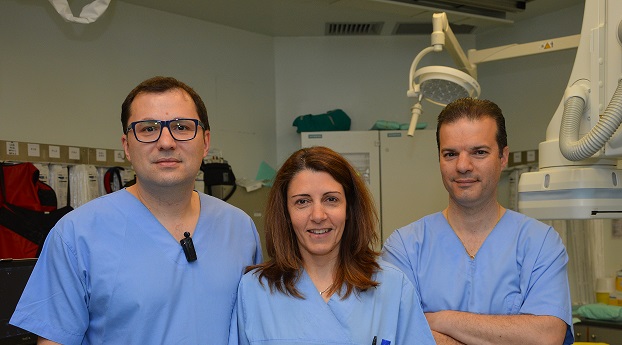
Advantages of the method
As stated by the lead Interventional Cardiologist, Dr. Vlasis Ninios, “the procedure is performed percutaneously and offers advantages over other methods; access is gained via the femoral vein rather than an artery, thereby eliminating the risk of bleeding complications. Furthermore, the entire procedure is guided by ultrasound imaging, which ensures a complete view and allows for the monitoring of all devices directed toward the mitral valve—all without the use of contrast agents.” With the “Mitraclip” method, “open-heart surgery is avoided; the heart continues to function throughout the procedure, and the outcome is assessed while the heart is actively beating,” notes Dr. Ninios.
How the “Mitraclip” procedure is performed
The technique involves accessing the heart via the femoral vein and advancing toward the left side of the heart by puncturing the septum (the wall) that separates the left atrium from the right atrium. From this point, the “MitraClip” is introduced, with the ultimate goal of joining the two leaflets of the mitral valve; this reduces valve insufficiency without adverse effects, while simultaneously facilitating the remodeling of the heart as a whole.
The patient remains in the intensive care unit for one night—purely as a precautionary measure—is hospitalized for a 24-hour period, and is subsequently discharged, returning to their daily activities.
This method has been successfully employed for the past six years by the Ninios team, achieving a success rate of over 90% in patients with heart valve conditions.


