

Pioneering procedure for immediate reconstruction of the facial nerve following total parotidectomy
A pioneering procedure for the **immediate** reconstruction of the **facial nerve**—performed on a patient with a parotid tumor who underwent a **total parotidectomy**—was successfully completed at the **Interbalkan Medical Center** in Thessaloniki by a team of oral and maxillofacial surgeons, **Dr. Ioannis Chatzistefanou and Petros Zikos.**
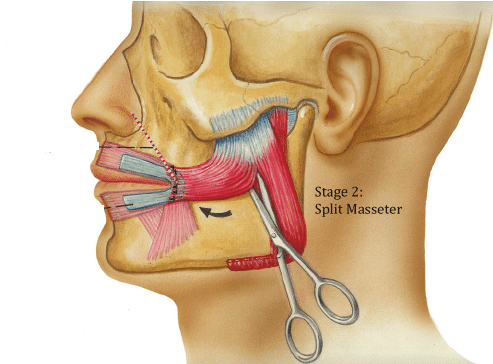
This innovative procedure offers a therapeutic solution for patients who have undergone resection of the facial nerve—due to a **tumor, stroke, or trauma**—and consequently face an inability to close their eyelids (risking potential loss of the eye), as well as a significant drooping of the corner of the mouth, which causes difficulty with eating and drooling (saliva leakage).
This initial case will be presented to the medical community as part of upcoming scientific activities. It concerns a 63-year-old patient with an aggressive carcinoma of the left parotid gland, which had resulted in facial nerve palsy due to tumor infiltration. Following a unanimous recommendation by the Oncology Board of the Interbalkan Medical Center, oral and maxillofacial surgeons I. Chatzistefanou and P. Zikos performed an extensive oncological procedure: a total parotidectomy—including the resection of the facial nerve—accompanied by an ipsilateral selective lymph node dissection to eradicate the disease. During the same operation, they also performed an immediate reconstruction to restore facial nerve function.
The “dynamic” reconstruction technique chosen involved the mobilization of adjacent muscle flaps. The temporalis muscle was utilized to restore movement to the eyelids, while the masseter muscle was used to provide tone and movement to the corner of the mouth. Since both of these muscles are innervated by the trigeminal nerve, their function remains unaffected by the resection of the facial nerve.
The outcome of the surgery was highly impressive, resulting in a significant restoration of facial nerve function. The patient is able to open and close their eyelids, eliminating the need for auxiliary eye drops to manage dry eye. Furthermore, the patient can eat normally—with no leakage of food or even liquids from the corner of the mouth—and experiences no drooling (salivary leakage). This pioneering procedure, performed by the team of two oral and maxillofacial surgeons at the Interbalkan Medical Center, opens up new horizons in addressing the issues of patients who would otherwise suffer from such problems throughout their entire lives.


