

Acute otitis media in children
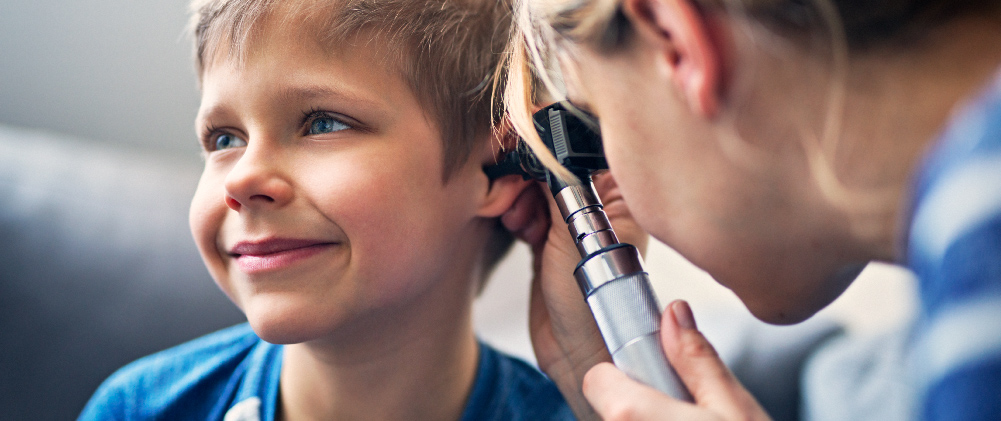
The term acute otitis media refers to inflammation that develops in the middle ear (i.e. in the area of the ear that is behind the eardrum).
Acute otitis media is the second most common childhood disease.
The first is rhinitis, i.e. the runny nose that children have, especially during the winter months.
Our ears communicate with the nose through a “tube” called the Eustachian tube.
By extension, when a child has a runny nose, it is possible for viruses or germs to be transferred from this tube to the middle ear, thus causing acute otitis media.
In general, acute otitis media is caused by viral infections mainly (almost 90-95%) and only 5-10% are microbial.
As we will say below, this is of great importance in terms of treatment.
The symptoms of acute otitis media are intense. The two main symptoms are:
- a stuffy nose
- ear pain.
The pain can be very intense to the point that it causes the child to cry very loudly and is not easily reduced with the known painkillers.
Other symptoms are:
- fever
- headache
- hearing loss (especially in older children)
- severe malaise
- anorexia
- cough
- rarely vomiting.
In some cases, parents may see fluid draining from the child’s ear.
This usually means that the eardrum has ruptured and pus is draining out.
It should be clarified that a ruptured eardrum is not always a bad development of acute otitis. In this way, sometimes the ear is “relieved” since the pus flows outward and does not accumulate within the middle ear cavity and the child certainly stops hurting.
The treatment depends on whether the otitis is of viral or microbial origin.
In viral otitis, which is the majority, the treatment is painkillers (mainly we prefer mild anti-inflammatory drugs alternating with paracetamol, such as every 3-4 hours if necessary.
A very important element of the treatment is rest, very good hydration and proper nutrition for the child.
This can be a significant problem especially for younger children who stubbornly refuse to eat and drink (even medicine sometimes) especially when they are sick. Parents should nevertheless insist on this.
A clean nose is part of the treatment and should be done regularly with nasal irrigation so that the child’s nose remains open and free of mucus. Sometimes local medicines inside the nose such as antiseptics, antibiotic drops help with this and corticosteroid sprays.
It should be emphasized that in viral otitis media, oral antibiotics should NOT be given because they have no effect.
Antibiotics should only be administered in microbial otitis media and only after the recommendation of the pediatrician or pediatric otolaryngologist.
Distinguishing the etiology of otitis media (i.e. whether it is a viral or microbial infection) is not always easy, which is why a child who has symptoms that resemble acute otitis media should always be examined by a Pediatrician or specialized ENT.
Author