

Urinary tract infection: Do I know what I need?
It is certain that Medical terminology has many unfamiliar words for the general public, however we have all heard the term “urinary tract infection”, since this condition is the second most common infection of the body after the common cold.
Depending on the organ of the urinary system that is affected, it also takes on its name: pyelonephritis (kidney), cystitis (bladder), urethritis (urethra). Half of women will experience at least one episode of urinary tract infection during their lives, while only 10% of men. In 90% of cases, it is cystitis. When we have more than 3 episodes per year, we are talking about recurrent urinary tract infections, which constitute ¼ of the total.
Since we are talking about infection, we are also talking about germs!
The microbe that most often causes urinary tract infections is coliform bacteria (80-90%), followed by proteus, staphylococcus, klebsiella, etc. These microbes, which are usually part of the normal flora of the body (intestine, vagina), enter the urinary system through the urethra and, more rarely, hematogenously. The proximity of the female urethra to the anus and vagina, as well as its short length compared to the male urethra, is responsible for the large difference in the frequency of cystitis in the two sexes.
Cystitis is NOT a sexually transmitted disease, that is, it is not “contagious”!! Sexual intercourse, however, transfers the already existing microbes in the area into the urethra and from there to the bladder! Urethritis, on the other hand, is caused by microorganisms (gonococcus, chlamydia, mycoplasma) that can be transmitted sexually and requires simultaneous treatment of both partners.
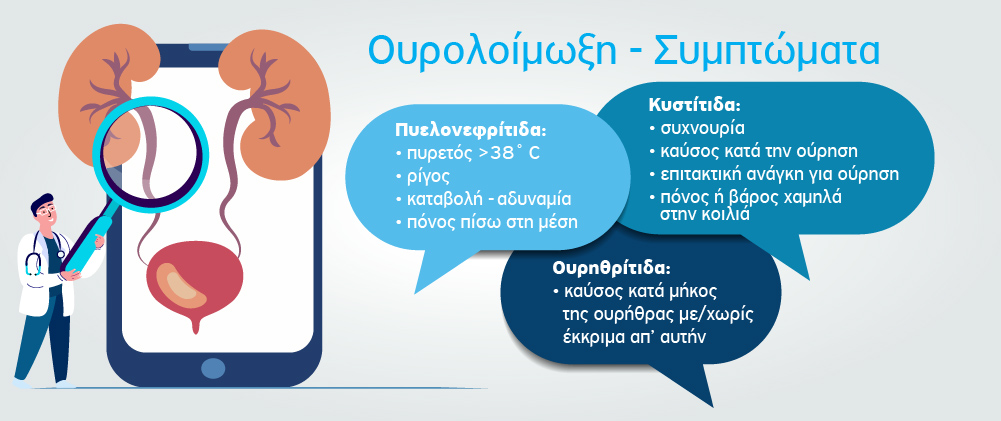
Symptoms depend on the location. In pyelonephritis: fever >380C, chills, fatigue – weakness, pain in the area of the affected kidney (back and waist). In cystitis: frequent urination, burning during urination, urgent need to urinate, pain or heaviness in the lower abdomen.
In urethritis: burning along the urethra with / without discharge from it.
Correct diagnosis and early initiation of medication, choosing the appropriate antibiotic for the appropriate duration, are important factors for the effective treatment of the disease and avoiding the development of microbial resistance or complications. It is worth noting that 80% of cystitis heals on its own after 3-4 days, thus “fooling” many women, who mistakenly do not seek medical advice.
Is there prevention?
Yes! There are some measures that may help reduce the occurrence of urinary tract infections:
- Plenty of fluids (mainly water). At least two liters a day, at intervals
- Do not postpone urination
- Urine before and after each sexual intercourse
- Wipe yourself after urination or defecation, always from front to back
- Good hygiene of the genital area (no sprays or perfumes, no vaginal washes, use of chamomile-based products)
- Wear comfortable clothes and, above all, good quality cotton underwear, which you change regularly
- Limit the use of tampons
- Cranberry juice (or preparations with cranberries), sheep’s yogurt or sour milk may help