

Coronavirus and children with chronic respiratory diseases
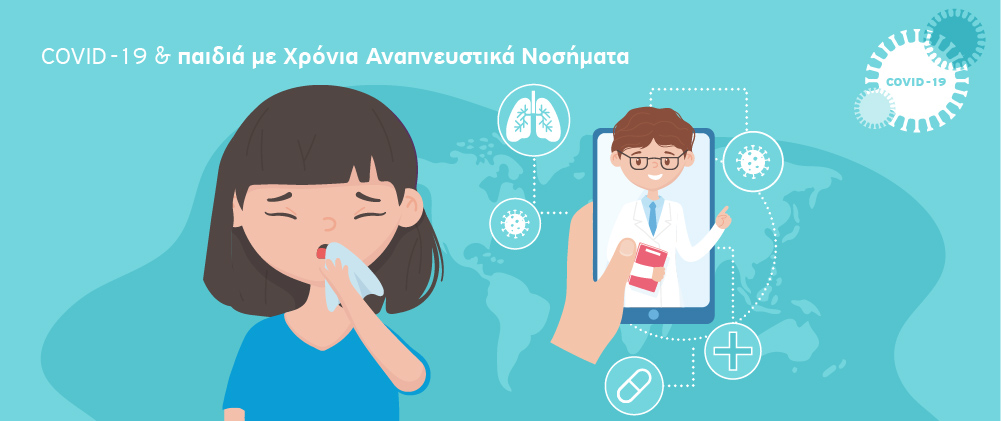
Although daily records show that children are affected less often than adults, official information makes it clear that “no one is immune.”
“High-risk” populations are more vulnerable. And every parent wonders if their child belongs to this group.
Does the child with frequent respiratory problems belong to the high-risk group?
First, briefly, what is the new coronavirus?
Coronaviruses are a large family of viruses that can cause everything from the common cold to more serious diseases, such as Middle East respiratory syndrome (MERS) and severe acute respiratory syndrome (SARS).
The new coronavirus of 2019, called “SARS-CoV-2”, is a new strain that had not been identified in humans before. The disease caused by SARS-CoV-2 is called “COVID-19”.
Because it is a new disease, our knowledge is limited.
The very first publication in a pediatric population was made a few weeks ago in the highly prestigious journal Pediatrics published by the American Academy of Pediatrics. It examined more than 2,000 sick children throughout China, where the pandemic began.
It provides a clearer picture of how children are affected by the virus and based on this information, it is possible to identify and organize the most appropriate management of the disease until the implementation of the vaccine.
More than 90% of all patients were asymptomatic, with mild or moderate disease. More than a third had moderate disease with additional symptoms, such as pneumonia or other lung diseases, as revealed by CT scan, without obvious difficulty breathing. About 4% had no symptoms at all.
However, there were 125 children (almost 6%) who developed very severe disease, and one 14-year-old boy with confirmed coronavirus disease died.
As a comment in the publication, it is almost certain that many more children with mild disease were not recorded and included in the study. Also, the milder disease was clear compared to adults.
Finally, there is no mention that children with underlying chronic disease had a more severe course of the disease.
Comments – recommendations
-
Immunocompetent children with the frequent mild symptoms in the context of recurrent viral infections in daycare or school are not at increased risk.
-
Children with asthma and allergies continue their chronic treatment, as recommended by the doctor, without being more vulnerable than others.
-
Children with a history of serious respiratory diseases and frequent hospitalizations, continue the treatment, as recommended by the doctor who is treating them.
In any case, all children, as well as adults, until the vaccine is available, must avoid the disease.
We follow the state’s instructions and stay at home strictly, without contact with third parties.
Author