

Nutrition and immunity in the days of Covid-19
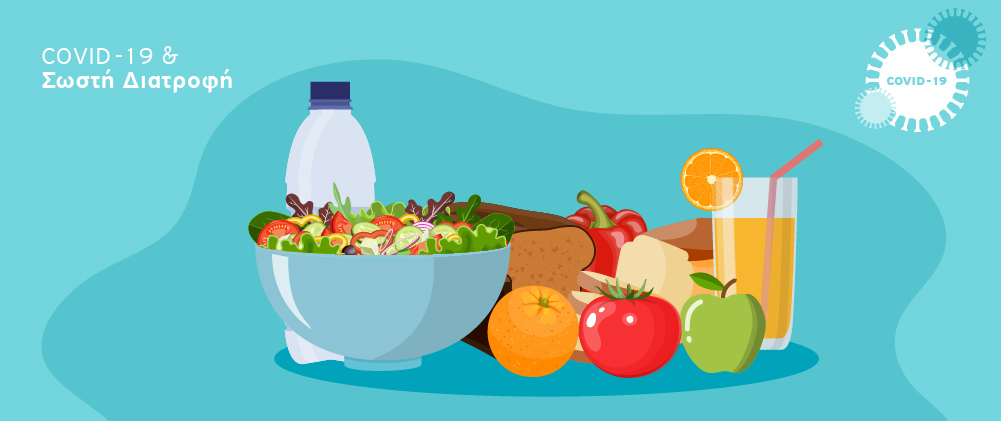
The European Food Safety Authority (EFSA) reassures us that the COVID-19 virus, like similar coronaviruses (SARS-CoV and MERS-CoV), is not transmitted through the food chain.
Similarly, all major dietetic associations state that it is scientifically established that no single food or dietary supplement can protect us from a viral infection. It is also scientifically established that adopting good dietary habits can help strengthen our immune system.
In brief, some of these habits for the healthy population are as follows:
Dietary variety – A wide range of nutrients interact to help keep our body’s defenses in good condition.
Vitamins such as C, B6, B12, A and D, and trace elements such as iron, zinc, selenium and copper, are involved in key immune functions in various ways. It would be wrong to focus on specific foods, as variety in our choices will provide us with a broad range of nutrients.
Fresh foods – avoid highly processed foods as much as possible. The variety of traditional Greek cuisine, together with the consumption of a wide range of fresh vegetables and fruits, can provide us with all the necessary nutrients.
Greece’s climate can provide us with fresh foods and, as long as the food supply chain remains active, it is advisable to take advantage of this.
Pasta and white flour products in general provide little more than calories (energy), which, in this particular situation and due to reduced physical activity, we do not need as much.
Mediterranean diet. It is the most extensively studied dietary pattern in the world, with proven benefits for long-term human health, both by supporting the immune system and by helping to avoid chronic inflammation.
Avoid radical changes in dietary habits by following fad diets. Even when some of these diets have a philosophical or scientific basis, there is a strong possibility that they may be followed incorrectly and lead to hidden malnutrition, which, due to insufficient monitoring by healthcare professionals, may have the opposite effect from what you expect.
Consumption of Comfort Food. Food is a source of pleasure.
This is something that accompanies us throughout our lives, whether during moments of well-being, reflection and concern, or illness. It has been scientifically established that macronutrients, particularly carbohydrates but also fats, stimulate a range of hormones.
Characteristic examples include serotonin, the so-called mood hormone that acts on the central nervous system, as well as glucagon or cholecystokinin, whose actions are associated with the feeling of satiety in the stomach, and ghrelin, often referred to as the appetite hormone.
The consumption of comfort food should be consistent with the following recommendation.
Reduce portion size – and the quantity of food consumed. Staying at home may also result in reduced physical activity. Therefore, a reduction in caloric intake is recommended in order to avoid gaining body weight. A varied intake of less processed foods helps us achieve satiety more quickly and with smaller quantities, while also contributing significantly to bowel motility and the overall health of the gastrointestinal microbiome.
Dietary supplements – with a varied diet, we can achieve an adequate intake of nutrients, provided that we are healthy.
One possible exception may be vitamin D levels, which, due to prolonged time spent indoors and the winter that has just passed, may need to be supported with a dietary supplement. The average recommended daily intake is 400 – 800 IU.
We should not forget that vitamin D is fat-soluble and that before giving any supplement to a child, we should always consult a pediatrician and a dietitian.
Making good use of our time – Creativity. Last, but perhaps most importantly, staying at home may encourage us to “look inward” and identify dietary mistakes or excesses we made in the past. Now is the time to make good use of the time we have with ourselves and correct them. If we have children, it is beneficial to make use of our interaction with them and try to overcome children’s inherent tendency toward neophobia by seeking ways to increase the variety of foods they eat and improve their nutritional education.
In conclusion, good hygiene practices and social isolation are clearly our best weapons during the pandemic, but maintaining a strong and functional immune system undoubtedly provides an additional protective barrier, not only against this particular virus but also for our overall health.