

Percutaneous Mitral Valve Repair with the MitraClip Device at the Athens Medical Center
At the Athens Medical Center, a percutaneous mitral valve repair using the MitraClip device was successfully performed by Georgios Papaioannou, MD, MPH—Interventional Cardiologist, Scientific Head of the Percutaneous Valve Program, and Director of the Department of Interventional Cardiology at the Athens Medical Center.
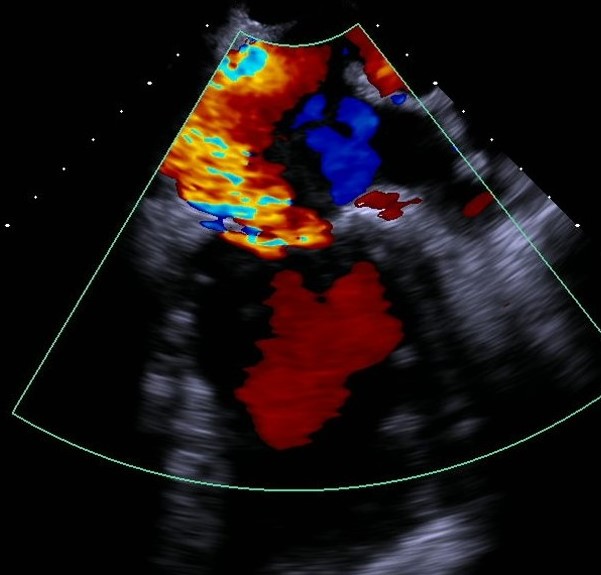
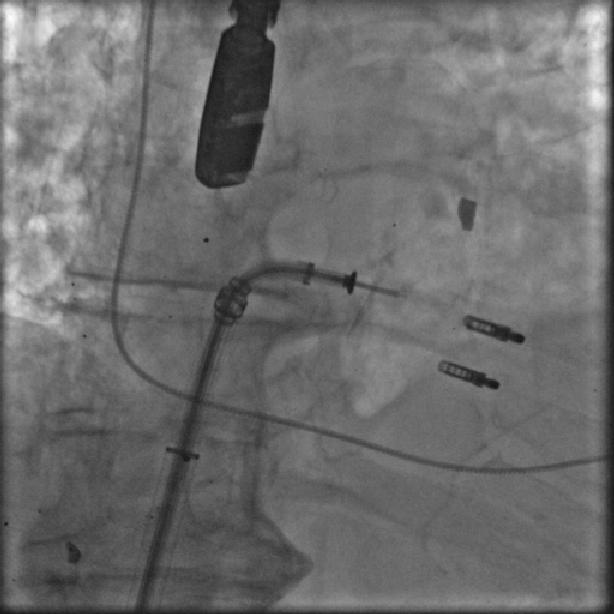
The procedure was performed on an 86-year-old patient suffering from coronary artery disease, renal failure, and chronic atrial fibrillation. The patient presented with symptoms of dyspnea (shortness of breath) during mild physical activity—despite the use of diuretics—due to severe mitral regurgitation (Figure 1). The intervention was carried out under general anesthesia and involved the placement of a sheath in the femoral vein, a transseptal puncture (puncture of the interatrial septum), and the advancement of the device. The procedure concluded with the deployment of the MitraClip, which brings the two leaflets of the mitral valve closer together, thereby reducing the regurgitation. Two MitraClips were implanted, yielding an excellent outcome both fluoroscopically (Figure 2) and echocardiographically (Figure 3); the procedure was supported by transesophageal echocardiography, which serves as the cornerstone for successful implantation. Following a brief hospital stay, the patient was discharged in excellent condition just two days after the successful procedure.
 |
 |
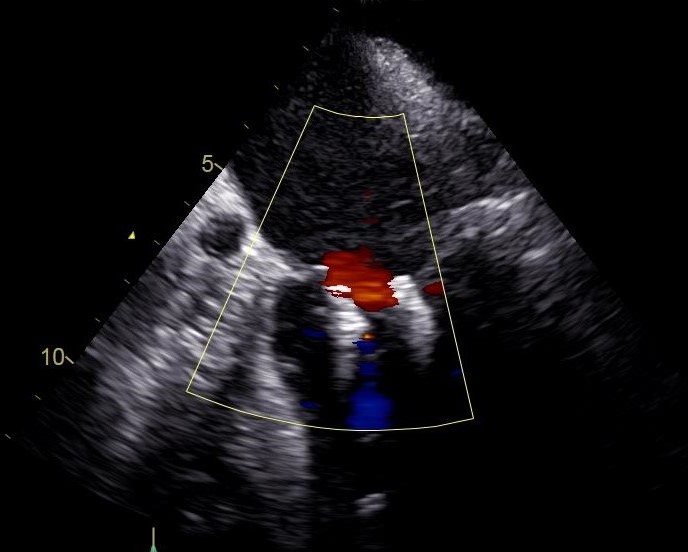 |
| Severe structural mitral valve insufficiency | Placement of two MitraClips, with an excellent result (fluoroscopic view) | Placement of two MitraClips, with an excellent result (ultrasound/echocardiographic view) |
The above technique is applied to patients classified as high surgical risk who present with symptoms of heart failure (dyspnea) due to severe—primarily structural—insufficiency of the mitral valve, which connects the left chambers of the heart (left atrium and left ventricle). Interventional mitral valve repair (MitraClip) builds upon the already successful percutaneous aortic valve intervention (TAVI) program, simultaneously complementing and advancing the hospital’s percutaneous valve program. It is worth noting that the Athens Medical Center is certified by the Central Health Council (KeSY) to perform these procedures, which are carried out in collaboration with a multidisciplinary Heart Team.
Upon the patient’s discharge from the hospital, Mr. G. Papaioannou stated: “The increase in life expectancy among the general population is accompanied by a rise in the prevalence of aortic and mitral valve diseases—a trend that, in itself, represents a significant contemporary public health issue. Consequently, minimally invasive interventions have become essential for improving both mortality outcomes and the quality of life for these patients.” “I would like to thank the multidisciplinary team—specifically Mr. Vasileios Kotsis, MD, Cardiac Surgeon and Director of the Department of Cardiac Surgery & the Beating-Heart Surgery Center, along with his associates; Mr. Stefanos Karagiannis, MD, PhD, Cardiologist and Director of the Echocardiography Department, along with his associates; Mr. Georgios Georgiou, Anesthesiologist; Mr. Georgios Peskesis, an associate in the Interventional Cardiology Department; as well as the entire nursing and technical staff of the Hemodynamic Laboratory. Above all, however, I would like to thank the Athens Medical Group; through its continuous investment in cutting-edge technology, its initiative to establish a state-of-the-art hybrid hemodynamic laboratory, and its support at every step, the Group enables us to advance to an even higher level of medical service provision.”


