

COVID-19 and vaccine candidates – a brief overview
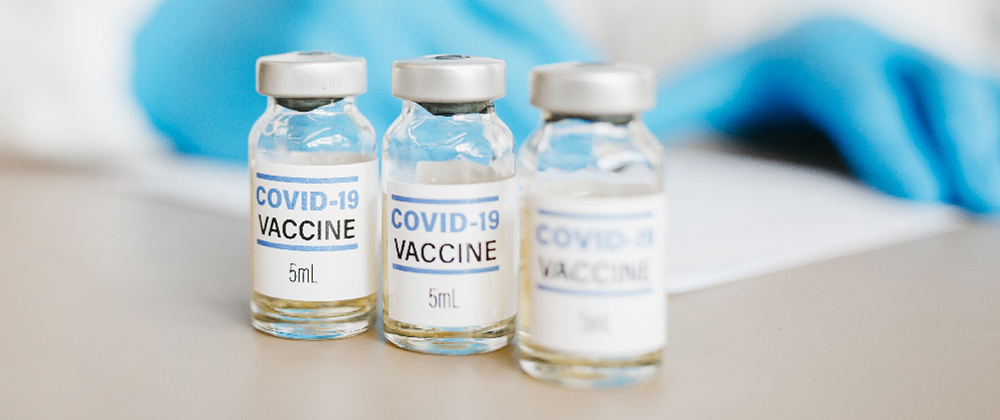
So far, although there is no vaccine available for the SARS-CoV-2 virus, which causes COVID-19, according to the World Health Organization (WHO), more than 50 different vaccines are being tested in human clinical trials, and 13 are in Phase III.
In order to address the pandemic, innovative vaccines are being developed, such as protein vaccines or those using DNA or RNA, viral vector vaccines, as well as inactivated or attenuated virus vaccines. All vaccines under development are designed so that if the SARS-CoV-2 virus manages to enter the body, the immune system is stimulated to fight it.
Vaccines aim to generate antibodies and cellular memory against characteristic structures of the virus.
The COVID-19 COVAX facility is the vaccine pillar of the “Access to Available Tools against COVID-19 (ACT)”, a global collaboration platform to accelerate the development, production and equitable access to tests, treatments and vaccines against COVID-19.
The European Union is contributing grants to support the COVAX facility to ensure access to future available vaccines against SARS-CoV-2 for low- and middle-income countries.
BioNTech and Pfizer announced the first results from the Phase III clinical trial of the mRNA vaccine, BNT162b2, in a two-dose format with more than 44,000 volunteers. This vaccine contains the genetic information of a structural part of the virus molecule, in order to prompt the body to produce antibodies.
Early results show that the vaccine is 95% effective, 28 days after the first dose.
In addition, no serious concerns were observed about its safety, due to mild adverse side effects. The companies announced that they have submitted an application for emergency authorization to the FDA. A disadvantage of this particular vaccine concerns its storage and transportation, as mRNA is unstable and must be stored frozen at a temperature of -70 to -80 °C.
According to the Phase III of the COVE study, with over 30,000 volunteers, the American biopharmaceutical company Moderna, received confirmation of the suitability of its vaccine under development, mRNA-1273, for the COVID-19 disease.
Early data from an interim analysis of the Phase III showed that the vaccine is 94.5% effective against the SARS-CoV-2 virus. No serious adverse events were reported, the most common being muscle pain, fatigue and headaches.
A significant advantage of this vaccine is its stability, as it can be stored at -20°C for up to six months and is maintained at the freezing temperature of a common refrigerator for up to one month.
Another experimental vaccine, AZD1222, which uses a viral vector, is being developed by the University of Oxford and the company AstraZeneca. These vaccines contain viruses designed to carry the viral genetic information.
In the results of an interim analysis, Phase III, of two different dosing regimens, AstraZeneca reported that AZD1222 was 90% effective, in those who initially received half the standard dose, followed by a full dose, at least a month later, and 62% effective, in those who received two full doses at least a month apart.
This vaccine can be stored under normal refrigeration conditions for at least six months.
French pharmaceutical company Janssen of Johnson & Johnson & Johnson began Phase III (ENSEMBLE) trials in 60,000 volunteers of its vaccine candidate, JNJ-78436735, in September 2020. The vaccine, which is a recombinant vector and uses a human adenovirus, leverages the same technology platform used to manufacture the company’s Ebola vaccine.
However, the adenovirus vector used in the vaccine candidate has been modified so that it can no longer replicate in humans and cause disease.
With Janssen’s AdVac® technology, the vaccine, if successful, is estimated to remain stable for two years at -20 °C and at least three months at 2-8 °C, making it compatible with traditional vaccine distribution methods and would not require new infrastructure.
Sanofi, in collaboration with GSK, is developing another candidate vaccine for COVID-19, based on recombinant protein, starting a Phase I/II clinical trial. At the same time, Sanofi together with Translate Bio announced positive preclinical results for the mRNA vaccine candidate, MRT5500, which is to be tested Phases I/II.
A biotechnology company developing next-generation vaccines for serious infectious diseases, Novavax, began Phase III trials in September 2020 for its adjuvanted vaccine, NVX-CoV2373.
Russia, on the other hand, presented promising data for its Sputnik V vaccine, which is in Phase III of clinical trials, in a second interim analysis of data from a clinical trial.
The Sputnik-V vaccination is carried out in two stages, and according to the head of Russia’s Gamaleya Research Institute, which produced the vaccine, the test results showed that it was 91.4% effective on the 28th day, and over 95% on the 42nd day.
So far, according to the results of interim analysis, 3 vaccines are in the lead (Astrazeneca / Oxford, BioNTech / Pfizer, Moderna / NIH), but the corresponding scientific publications are still awaited. Many more companies are conducting clinical studies with the aim of finding safe and effective vaccines, such as CureVac, Medicago, Inovio, etc.
However, once a vaccine is approved, sufficient quantities must be ensured so that it is distributed equally worldwide, which is why it is likely that there will be the possibility of producing many vaccines in different countries. Until then, it is estimated that the vaccines will be given based on priorities.
According to current data, a vaccine is most likely to be available by the end of 2020 or early 2021, due to the huge investments in clinical trials, the rapid regulatory requirements, the large number of volunteers, as well as the rapid decoding of the genetic makeup of SARS-CoV-2.



