

3 useful answers for summer allergies
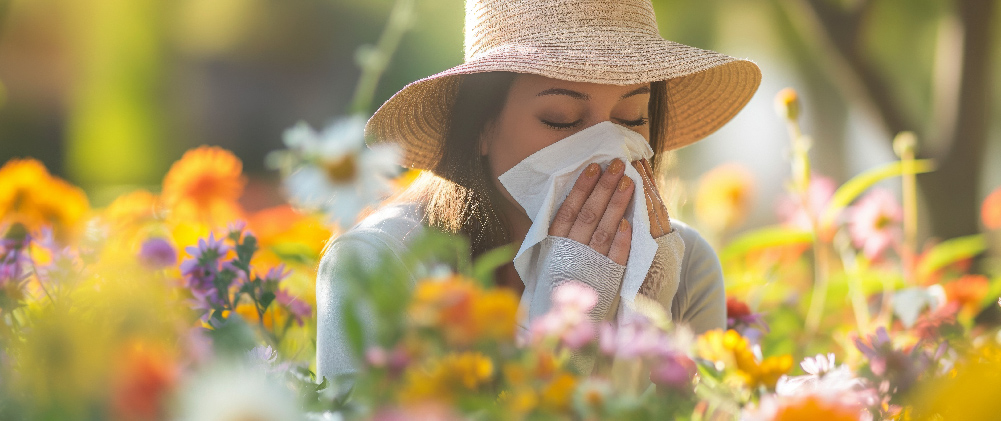
1. Do respiratory allergies (rhinitis / asthma) stop in the summer?
It depends on the allergens responsible for our allergy. The flowering period of e.g. olive trees or grasses is over in the summer, but other trees or plants (partridge, lawn or ragweed) are still present in the atmosphere and cause symptoms.
In addition, animal allergens (cat, dog), mites or fungi are present in the atmosphere all year round and therefore affect people allergic to them all year round. Special allergy tests help immediately and painlessly to isolate the allergens responsible for our symptoms and to take targeted appropriate measures.
2. I have had a serious allergic reaction after a bee sting. Since then, I have been very afraid to go outdoors in the summer. Is there a treatment?
A severe allergic reaction after a bee or wasp sting can indeed be very life-threatening and the fear is justified.
However, my anxiety will be significantly reduced and I will enjoy my summer:
-
The appropriate protective measures to reduce the likelihood of being stung again (avoiding printed clothing, never walking barefoot, avoiding strong scents and food outdoors, closing windows when driving, etc.)
-
Always having with me the anaphylaxis treatment kit with self-injectable adrenaline and knowing how to administer it. Specific immunotherapy to bee or wasp venom is the only etiological treatment for this allergy, which in a very short period of time will protect me from dangerous reactions to a possible future sting.
Appropriate medication and protective measures are recommended by the Allergist, while this sensitivity should usually be assessed twice a year, before exposure to the winter cold (skiing, freezing, etc.) and before the start of summer vacations at the beach.