

DR. V. APOSTOLOPOULOS: SIGNIFICANT DEVELOPMENTS IN HEALTHCARE OVER THE NEXT 18 MONTHS – INTERVIEW WITH A.P.E.
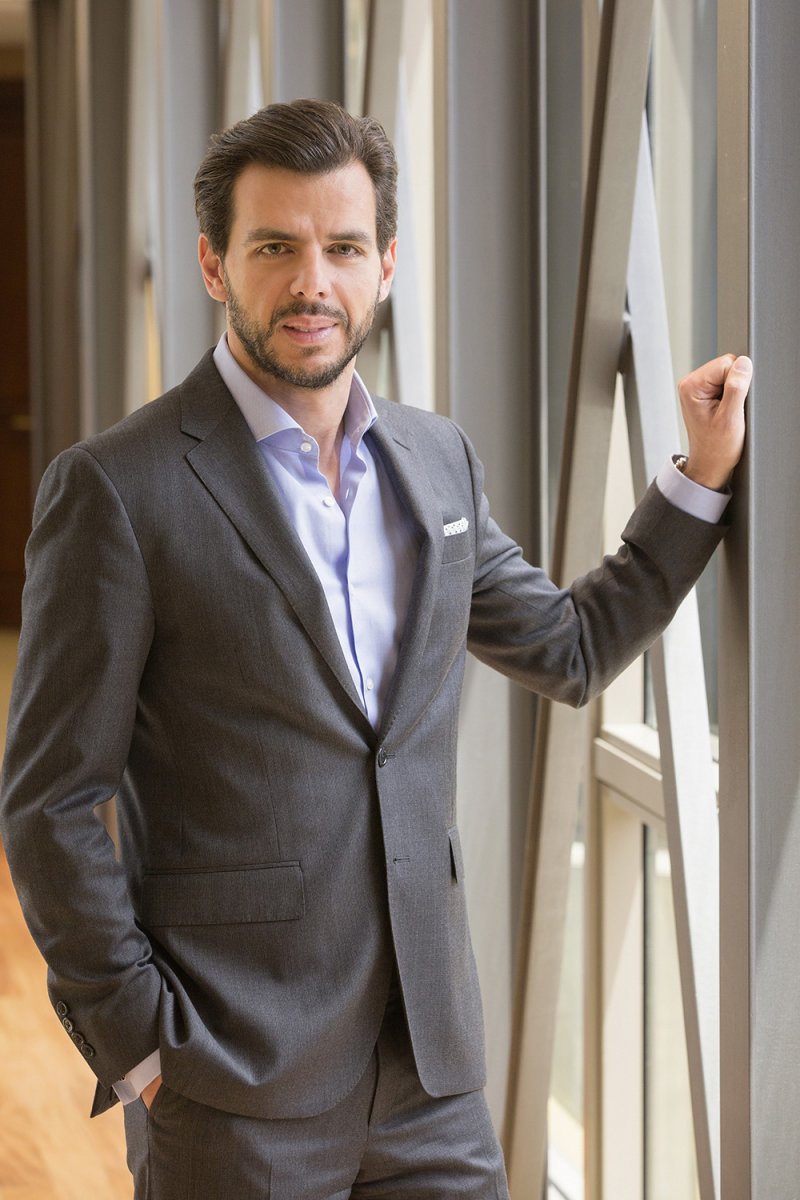
In a television interview with “Praktoreio,” Dr. Vasilis Apostolopoulos, CEO of the Athens Medical Group, expresses the Group’s intention to play a leading role in potential mergers within the healthcare sector. He specifically notes that significant developments are expected to take place over the next 18 months. Furthermore, he mentions the possibility of foreign investors participating in these mergers, with the Athens Medical Group aspiring to serve as the Greek anchor. Dr. V. Apostolopoulos announces the opening of another facility in Bucharest within 2017, highlights the Group’s “firsts” in the scientific field as well as the role of new technologies, and places special emphasis on the Interbalkan Medical Center in Thessaloniki—which he describes as “the spearhead of our Group’s outward-looking strategy and its efforts to attract medical tourism.”
Below is the transcript of a television interview given by Dr. Vasilis Apostolopoulos to the Agency and Tania Mantouvalou.
I’d like to start with these “firsts”—the “championship-level” performance your Group achieves in the scientific field. Which of these would you highlight?
The key ingredient in our enduring success—from the founding of the Athens Medical Center in Marousi in 1984 to the present day—is precisely this commitment to achieving “firsts.” When we first started, we were the pioneers who introduced the coronary angiograph. Over the years, many more “firsts” followed—such as the introduction of the first multi-slice CT scanner, robotic surgery, and a great deal more—all of which have cemented our reputation in the public consciousness as pioneers in the field. You have repeatedly referred to the significance that medical tourism can hold for the Greek economy. What steps are you taking in this direction, and what role does the Interbalkan Medical Center in Thessaloniki—to which you attach particular importance—play in this regard?
Indeed, the Interbalkan Medical Center in Thessaloniki serves as the spearhead for our Group’s outward-looking strategy and our efforts to attract medical tourism. As early as the late 1990s, when the Chairman of our Group, Dr. Georgios Apostolopoulos, conceived the idea for the Interbalkan Medical Center, the objective was to attract patients from neighboring countries. Today, we have fully achieved this goal. We treat approximately 7,000 international patients annually, hailing from 53 different countries. There are also specialized programs and services designed to assist individuals well before they arrive in Greece, as well as after they return home.
We operate two service centers for international patients—one in Athens and one in Thessaloniki—which provide an end-to-end, integrated service. This encompasses everything from addressing a patient’s initial questions before they travel, through their hospital stay and recovery care, to their eventual return to their home country, equipped with a complete medical record.
You already have four facilities in Bucharest. Do you plan to expand further in Romania, and if so, in what way?
Our goal for 2017 is to open a fifth facility in Bucharest. Like our own country, this market has faced significant hardships during this period—though I certainly hope we are now nearing the end of that phase. The market is currently in a stage of renewed growth, and the Athens Medical Group was among the first foreign companies to establish operations in Romania. Having already completed 20 years of successful presence there, I believe the time has come to accelerate our pace of growth in the country. It is, however, quite remarkable that you are expanding, given the adverse economic environment in Greece. It is well known that healthcare spending has seen a dramatic decline since 2009—with one in four private clinics closing down over the last five years—yet you have just mentioned that you are opening a new facility.
I believe our outward-looking approach throughout this period has played a significant role. We have expanded within Greece, effectively establishing new departments in each of our hospitals. We now offer new medical services, and we have continued to invest in upgrading our equipment and biomedical technology. We have not reduced our staff; on the contrary, in absolute terms, our workforce has grown by 3% compared to the start of the crisis. I believe this effort has been recognized by Greek society. Consequently, the ability to attract new patients and generate revenue—combined with cost-cutting measures (implemented only where feasible, and never at the expense of the quality of our services)—has led to this positive outcome. The secret to success?
The secret to success is that the 3,000 people who are with us view the Group as one big family….and this sentiment drives us, on a daily basis, to go the “extra mile”—to put in that additional effort—ensuring that we all contribute 100% toward this sacred cause and the realization of this vision.
Research indicates that, due to the crisis affecting the private sector, there is a trend toward consolidation in the market. I am referring to a study by Deloitte—which I am sure you are familiar with—which states that “as a result of the crisis faced by the private sector between 2012 and 2015, a trend toward consolidation has emerged, with the number of private hospitals decreasing by 6%.” In a previous interview—back in May 2016, if I am not mistaken—you mentioned that, should such a scenario arise, you intend to play a leading role. Can you share anything more specific with us today?
I fully agree with Deloitte’s assessment. In fact, this is a conclusion we reached long before this study was published, and it remains a key strategic objective of ours. The healthcare sector is set to undergo significant changes. The time has come for consolidation within the sector. Our Group aspires not only to play a leading role but also to serve as a Greek anchor—especially given the potential influx of foreign investors. Consequently, the Athens Medical Group aims to expand while simultaneously preserving its Greek identity.
So, are you breaking some news here?
I believe the next 18 months is a reasonable timeframe in which we might see some significant developments in the sector.
From time to time, you offer special rates for medical examinations. However, in Greece—amidst the ongoing crisis—some people cannot afford even these reduced costs. Are you planning any initiatives for these vulnerable groups?
For us, Corporate Social Responsibility is a core pillar of our strategy. It is not merely a trend followed by other companies; rather, it stems from a genuine, innate desire to give back to society—and specifically to those who cannot cover their medical expenses—a portion of what society itself has given to us. Last year, we placed particular emphasis on our initiative in Fournoi, Ikaria, where we effectively took the entire area under our wing in terms of healthcare. However, this is an ongoing initiative, and we intend to include other border regions within this framework next summer.
In addition to being the CEO of the Athens Medical Group, you have also served as the President of the Hellenic Entrepreneurs Association since 2012.
In closing, I would like to ask: how do you see the Greek economy ten years from now?
At the end of the day, being an entrepreneur means being an optimist. So, I will give you an optimistic answer. I believe that the time will come when all the hard work and sacrifices made by all of us over the last few years will bear fruit; I truly believe that our country both deserves and is capable of a better future.


