At what age should teeth brushing begin?
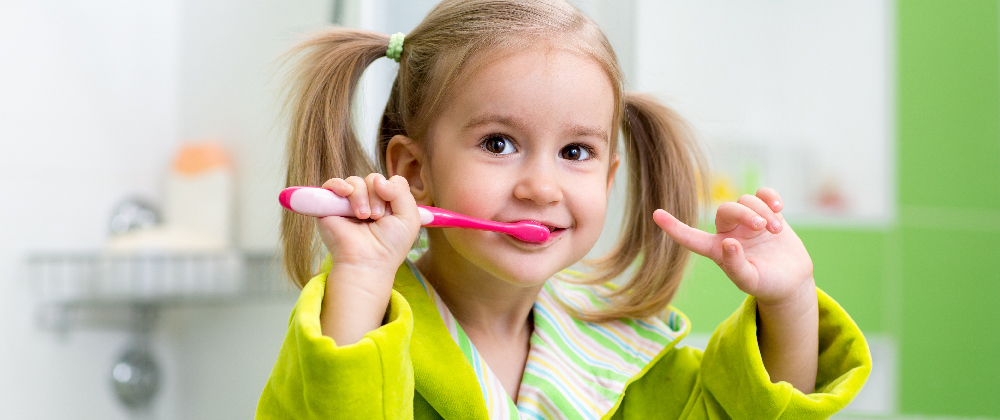
Many parents wonder at what age they should start brushing their child’s teeth.
In many cases, the impression is created that baby teeth do not need to be cleaned, as they are replaced by the permanent dentition during the transition from infancy to childhood and adolescence.
This perception, however, is particularly erroneous, as diligent cleaning of teeth from a young age plays an important role in the subsequent hygiene of the permanent dentition.
Thus, when baby teeth have poor hygiene, the physical condition of the permanent teeth is also affected, which in some cases may emerge with problems.
The main factor that affects dental hygiene is sugar. Not only the amount consumed is important, but also the duration of its stay on the surface of the teeth. teeth.
Some foods, such as juices and soft drinks, as well as lollipops expose the teeth for a longer period of time. In contrast, the sugars contained in fruits and milk are less likely to cause cavities.
For this reason, it is recommended to clean the teeth from the beginning of teething (with the appearance of the first teeth). At this early age, cleaning can be done with a clean cloth, gauze or even with the finger. During this process, both the teeth and the front part of the tongue should be cleaned and should be repeated after each meal, as well as at night before bed.
Pediatric dentists recommend the use of a toothbrush that should be moistened with water and a small amount of toothpaste (no larger than the size of a lentil) specific to each child’s age.
In general, the toothbrushes chosen should be of a size that corresponds to the child’s oral cavity and in most cases they have a maximum of three sets of filaments.
In the event that the toothbrush becomes worn at its edges (or if 3-4 months have passed since the start of its use), it should be replaced.
Accordingly, the toothpaste used must be specific to the child’s age, but in any case the fluoride content should be greater than 1000 ppm.
Up to 2 years of age, it is recommended to use 1000 ppm and a lentil-sized amount of toothpaste in each application, provided that the child cannot spit. For children from 2 to 6 years old 1450 ppm and a half-pea sized amount of toothpaste, while for children from 7 to 14 years old 1450 ppm and a pea sized amount of toothpaste.
During cleaning, small circular movements are recommended in order to cover all surfaces.
As long as the child is old enough to obey commands, he should be encouraged to discard the toothpaste (spit it out), while the use of water is generally not considered necessary.
Assisting the child during brushing can usually be stopped once he is 7 years old, provided that he is able to thoroughly clean his teeth.
In many cases, children are not particularly receptive to the process of brushing their teeth. teeth. If this is the case with your child, you should remember that this process should not cause him stress.
The most important thing is for him to gradually accept it as part of his daily routine, and in some cases, to achieve this, you should offer him the opportunity to control the situation, for example, by letting him hold the toothbrush for a long time and try to complete the process on his own.
Author